-
How LiDAR Terrain Models Shape Geohazard Maps
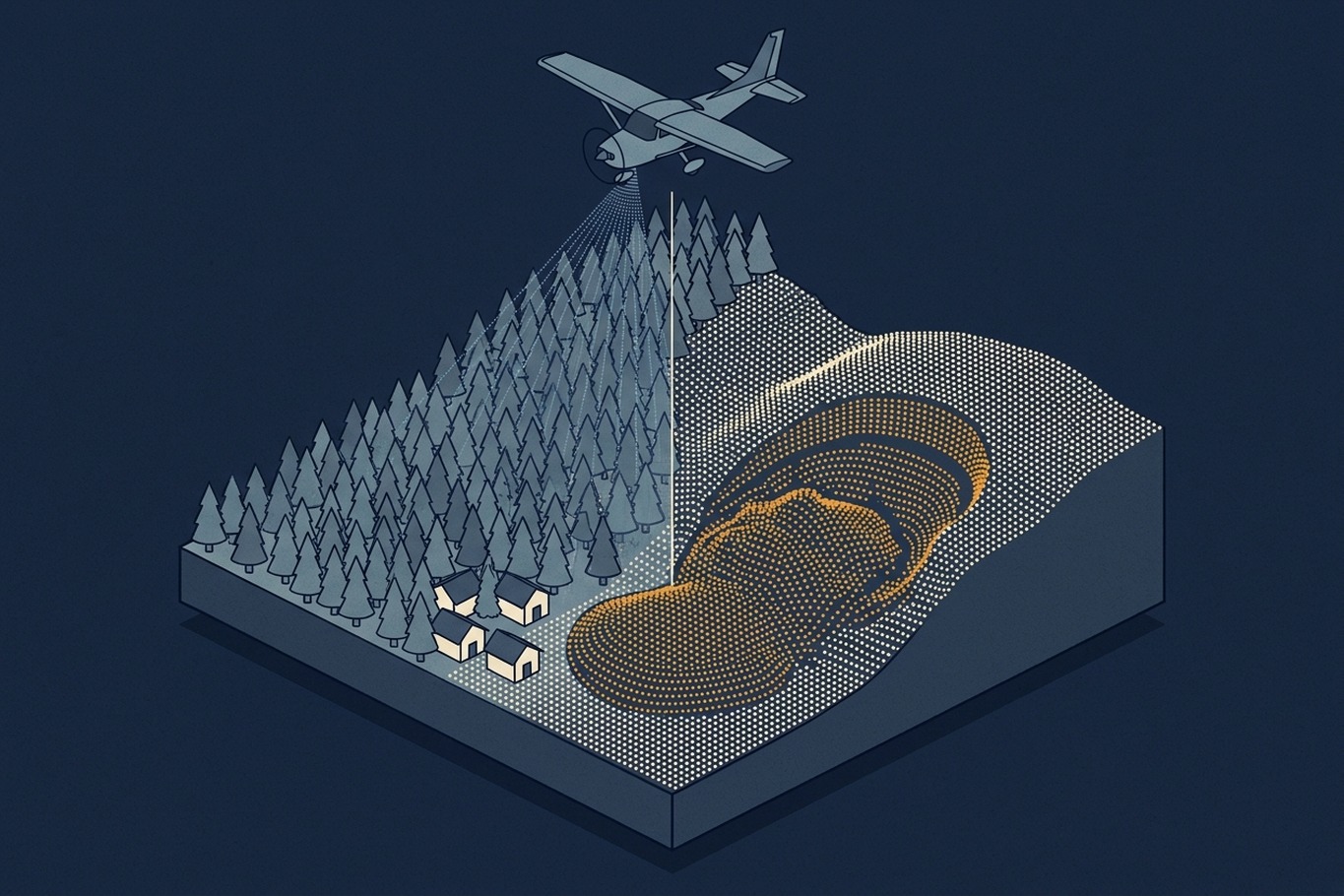
A new LiDAR-based landslide map brought 1,869 properties into a hazard overlay and took 1,702 out. This article explains how bare-earth terrain models reveal landslides under forest, where they can mislead, and what to ask before one becomes a hazard map.
More Content
-

Pulse Repetition Frequency
Pulse repetition frequency sets how many points a LiDAR survey can collect, but a higher rate costs energy in every pulse and runs into the travel time of light. This article explains the trade-off and how multiple pulses in the air work around it.
-
LiDAR Calibration and Strip Adjustment
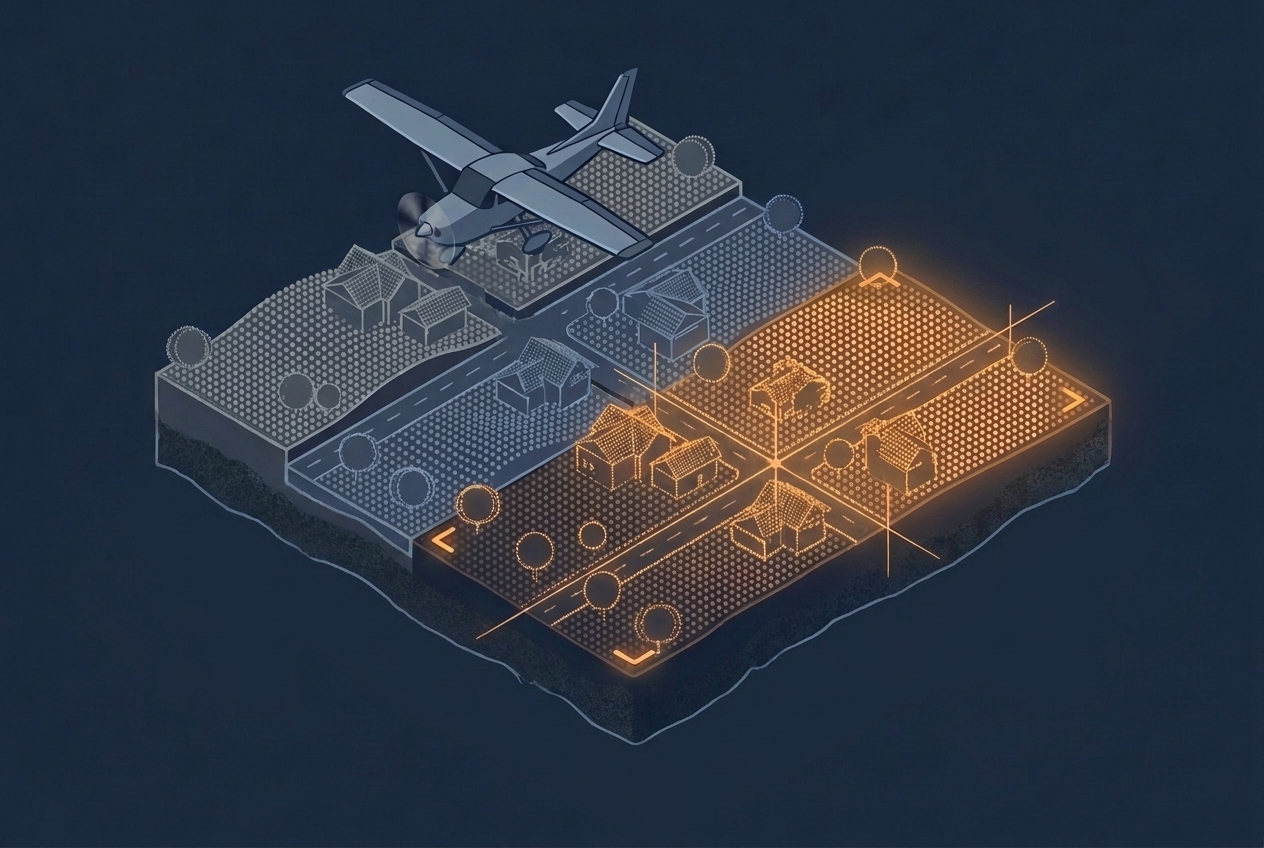
Overlapping LiDAR strips rarely line up on their own. This article explains where the offsets come from, how project calibration and strip adjustment remove them, and what to ask about both when you evaluate a dataset.
-

Watching Point Clouds Grow
Every year, aerial survey contractors fly LiDAR sensors over three and a half to four million hectares, part of a six-year cycle that eventually covers every corner of the country. That is a lot of area to scan. When I mention this to friends and colleagues, they often wonder what could possibly make it worth…